
Why Live Bait Dies Overnight (And How to Prevent It)
If you've ever walked down to your dock before sunrise only to find dead shrimp or sluggish baitfish, you know how frustrating—and expensive—it can be. Healthy live bait is often the difference between an average day on the water and a great one.
While many anglers assume bait simply "dies overnight," the reality is that several factors work together to determine whether your bait survives. Understanding these factors can help you keep shrimp, pilchards, pinfish, threadfin, mullet, and other saltwater bait alive for days—or even weeks—instead of hours.
Temporary Storage vs. Long-Term Storage
Most anglers use an aerated bait bucket to transport bait from the bait shop to the boat. These buckets serve an important purpose, but they're designed for temporary use.
An aerator can add oxygen to the water, but the water itself isn't being refreshed. As time passes, waste accumulates and water quality declines. For a few hours on the way to the fishing grounds, that's usually fine. For overnight or multi-day storage, it's not the ideal solution.
Long-term bait storage requires maintaining water quality—not simply adding bubbles.
Water Quality Is Everything
Healthy bait starts with healthy water.
As shrimp and baitfish breathe and produce waste, the water around them gradually changes. Organic waste, uneaten food, and ammonia begin accumulating, placing increasing stress on the bait.
Even if the water appears clean, its quality may be steadily declining.
That's why successful long-term bait storage focuses on continuously replacing old water with fresh seawater rather than simply recirculating the same water.
Ammonia: The Invisible Threat
One of the biggest reasons bait dies overnight is ammonia buildup.
Shrimp and baitfish naturally produce ammonia as they respire and excrete waste. In enclosed systems without fresh water exchange, ammonia concentrations continue to rise.
High ammonia levels stress bait, damage delicate gill tissue, and eventually lead to mortality.
Aeration alone cannot remove ammonia.
Fresh water exchange continuously dilutes and removes it.
Bait Pens Have Their Place
For decades, bait pens have been a popular solution for waterfront anglers, and in many locations they can be a budget-friendly solution.
However, bait pens aren't ideal for every dock. And when stacked against a flow-through livewell setup, the difference in effectiveness and practicality are significant.
Pens are dependent on the natural flow of water below the dock. On a canal with stagnant water, this can leave bait without sufficient oxygen to survive.
Depending on your location, pens are vulnerable to predators, fouling from marine growth, storm debris, and changing tides. Because they hang beneath the dock, they're also limited to the water temps at that specific depth.
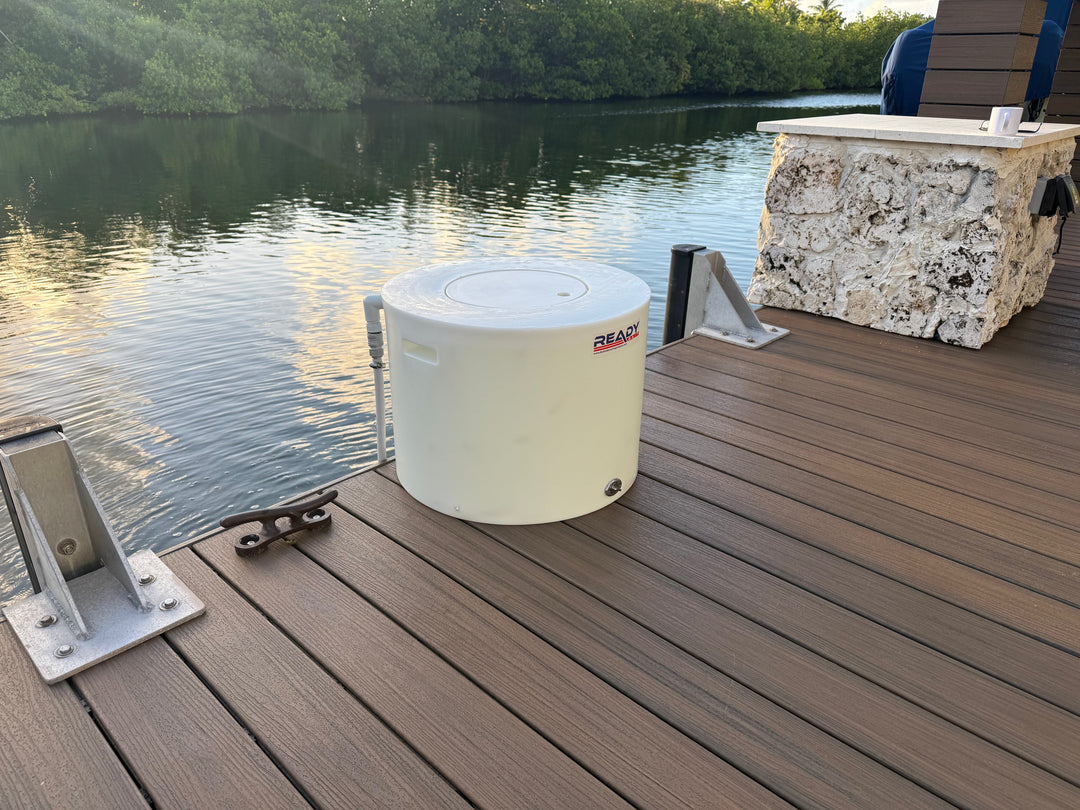
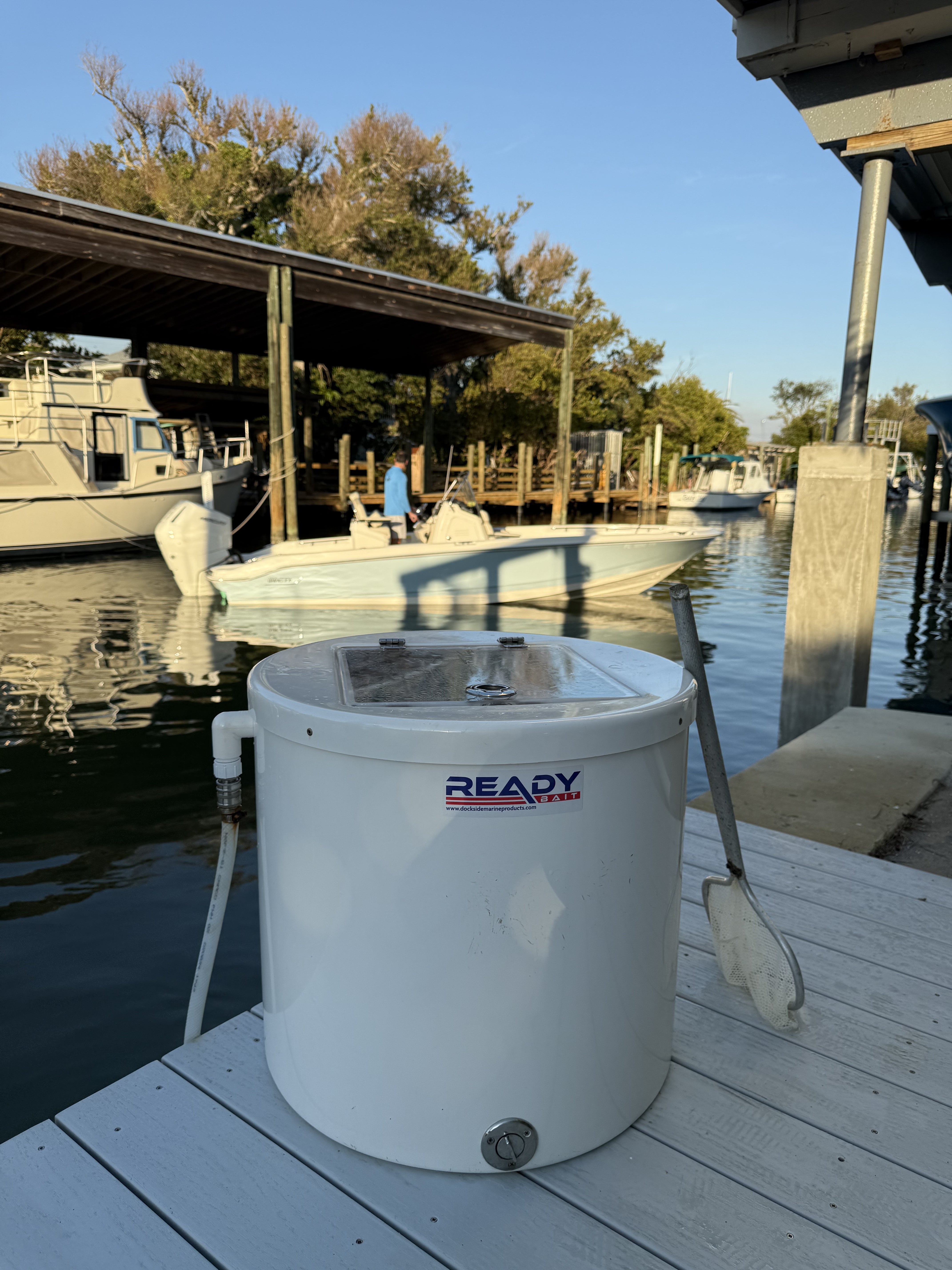
An enclosed dock livewell offers anglers another option that not only uses water from below your dock, it supercharges oxygenation by providing constant waterflow through a spraybar. Systems such as the Ready Bait Livewell are able to drop a pump down to cooler depths than a pen could reach practically.
Continuous Water Exchange Makes the Difference
The biggest advantage of a dock livewell isn't simply that water moves—it's that new seawater is constantly replacing older water.
By continuously drawing in new seawater, a dock livewell helps:
- Maintain better overall water quality
- Flush away waste products
- Reduce ammonia buildup
- Replenish dissolved oxygen
- Provide a more stable environment for long-term bait storage
Another advantage is flexibility. The intake pump can be positioned deeper beneath the dock, where water is often cleaner and, depending on local conditions, more stable than surface water. This allows the system to continually bring in fresh seawater from below rather than relying solely on the water immediately surrounding a bait pen.
The Ready Bait Difference
The Ready Bait Dock Livewell was designed around one simple principle: healthy bait starts with healthy water.
Instead of relying solely on recirculating water or a simple aerator, Ready Bait continuously pumps water from beneath your dock into the livewell while older water exits the tank. The result is a cleaner, healthier environment designed for long-term storage of shrimp and baitfish.
Whether you're fishing every day or only on weekends, having lively bait waiting at your dock means fewer bait shop trips and more time on the water.
Final Thoughts
Keeping live bait alive isn't about luck. It's about providing a healthy, stable environment.
Continuous water exchange that flushes waste buildup, reasonable stocking densities, and routine maintenance all play an important role in long-term bait survival.
When your bait stays healthy, you're always ready for the next tide, the next weather window, or the next unforgettable day on the water.